Week 5
Segmented
Assimilation Theory
Soci—231
A Fractured Mainstream–
September 29th
Reminders
Response Memos Are Due Tonight
Response Memo Deadline
Memos for Week 5 are due by 8:00 PM tonight.
Reminders
Straight Line Assimilation
Click to Expand .gif
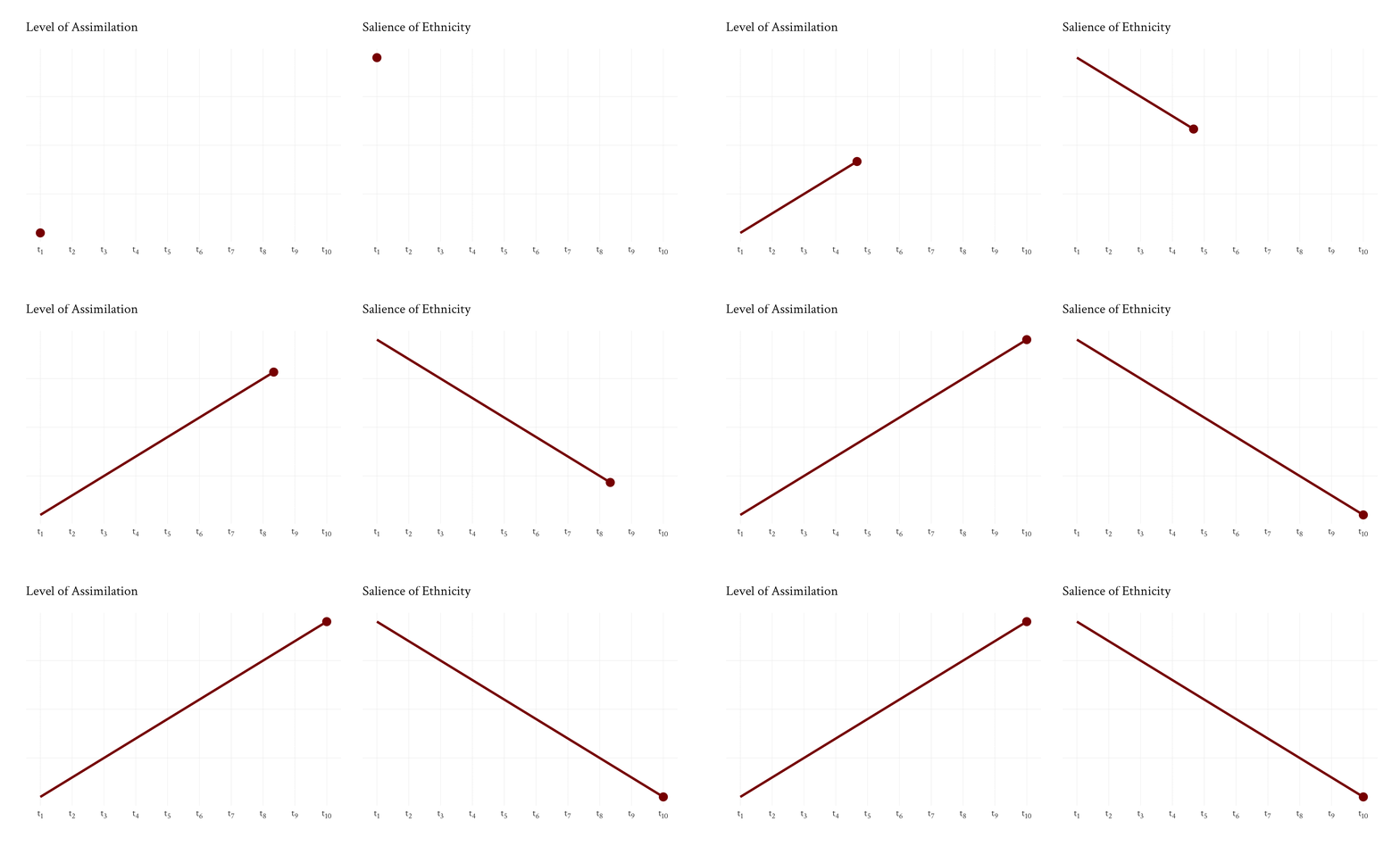
Reminders
Neo-Assimilation Theory
Click to Expand .gif
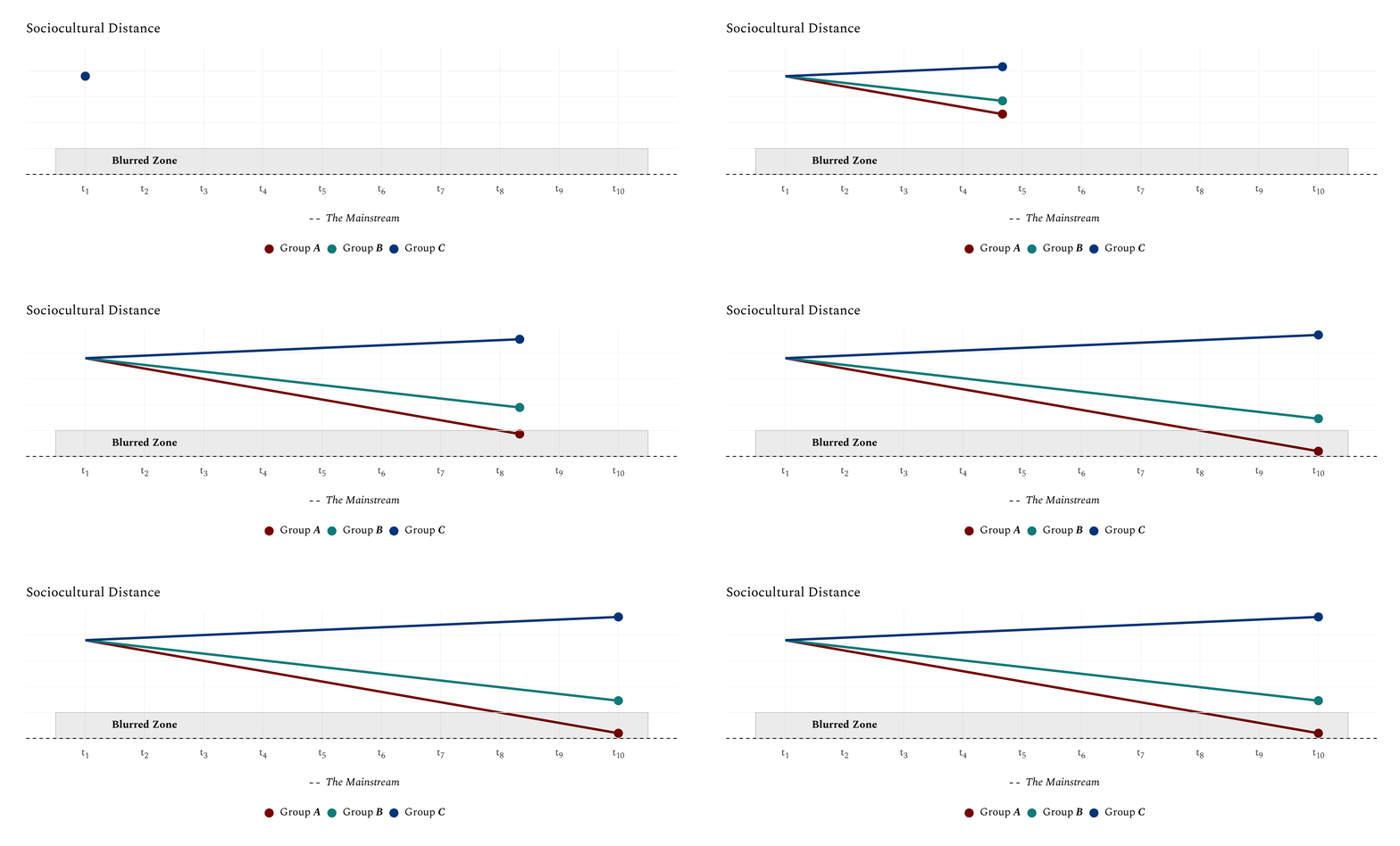
A Preview
Segmented Assimilation Theory
Click to Expand .gif
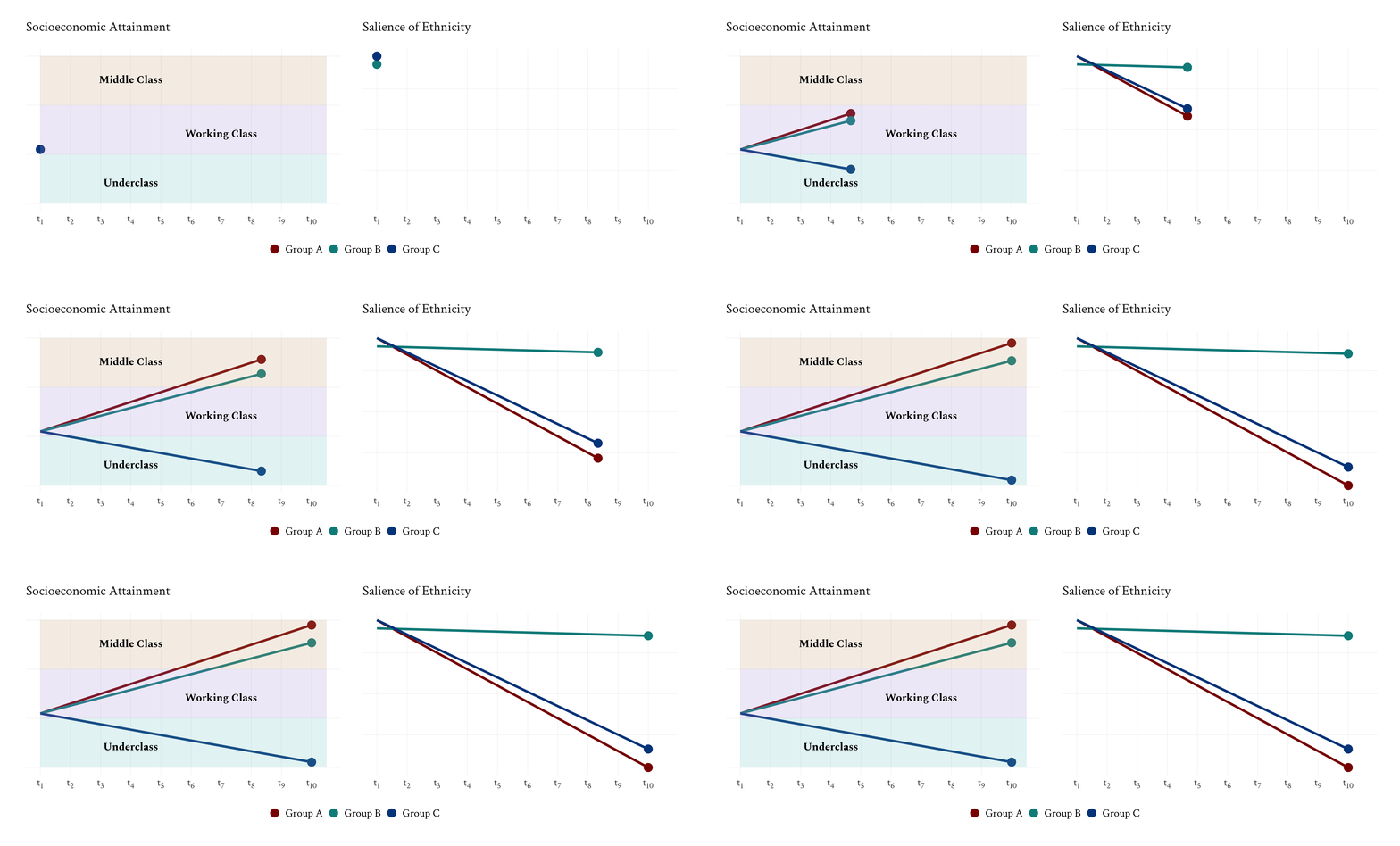
Segmented Assimilation
(Portes and Zhou 1993)
Segmented Assimilation and its Variants
Growing up in an immigrant family has always been difficult, as individuals are torn by conflicting social and cultural demands while they face the challenge of entry into an unfamiliar and frequently hostile world. And yet the difficulties are not always the same. The process of growing up American oscillates between smooth acceptance and traumatic confrontation depending on the characteristics that immigrants and their children bring along and the social context that receives them.
(Portes and Zhou 1993:75, EMPHASIS ADDED)
Segmented Assimilation and its Variants
When Portes and Zhou (1993) published their seminal article, scholars of “the new immigration” almost exclusively studied the first generation.
This was, for a variety of reasons, a
major shortcoming.
Segmented Assimilation and its Variants
Click to Expand Image
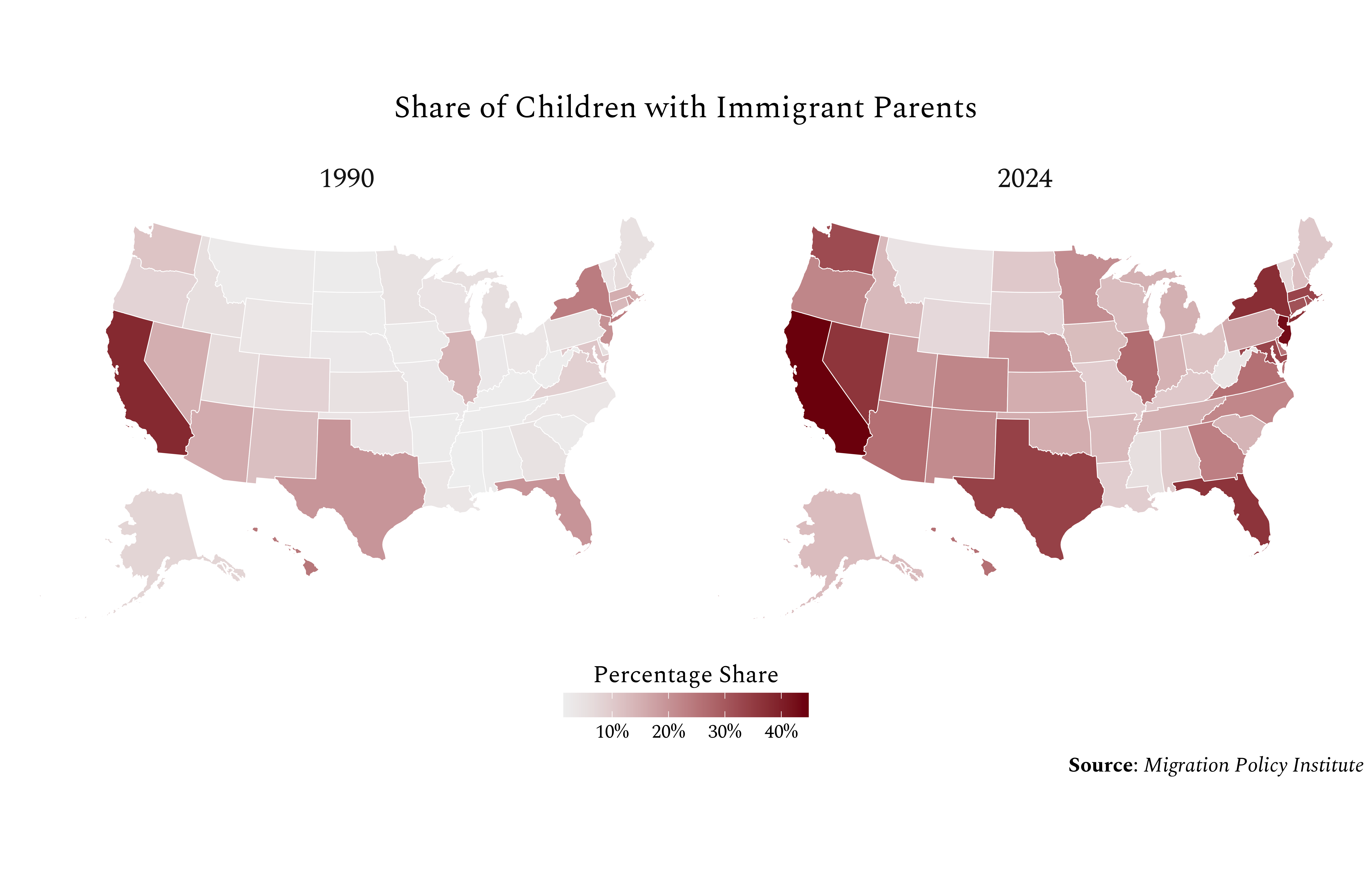
Data come from the Migration Policy Institute.
Segmented Assimilation and its Variants
The great deal of research and theorizing on post-1965 immigration offers only tentative guidance on the prospects and paths of adaptation of the second generation because the outlook of this group can be very different from that of their immigrant parents. For example, it is generally accepted among immigration theorists that entry-level menial jobs are performed without hesitation by newly arrived immigrants but are commonly shunned by their U.S.-reared offspring.
(Portes and Zhou 1993:76, EMPHASIS ADDED)
Segmented Assimilation and its Variants
Nor does the existing literature on second-generation adaptation, based as it is on the experience of descendants of pre-World War I immigrants, offer much guidance for the understanding of contemporary events … Conditions at the time were quite different from those confronting settled immigrant groups today.
(Portes and Zhou 1993:76, EMPHASIS ADDED)
Two Major Distinctions
Race
The Structure of Economic Opportunities in America
Segmented Assimilation and its Variants
New Americans at a Glance
1840–1889
Northern Europe wave
14.3million
RegionThousands%
Europe, total12,75789
North/West Europe11,70082
South/East Europe1,0587
Canada1,0347
Latin America1011
South/East Asia2932
Africa/Middle East5<0.5
Other/Not specified1241
CountryThousands%
Germany4,28230
Ireland*3,20922
United Kingdom2,58618
Norway-Sweden8836
1890–1919
Southern/Eastern Europe wave
18.2million
RegionThousands%
Europe, total16,13488
North/West Europe4,75726
South/East Europe11,37762
Canada8355
Latin America5513
South/East Asia3152
Africa/Middle East3322
Other/Not specified77<0.5
CountryThousands%
Italy3,76421
Austria-Hungary3,69020
Russia & Poland3,16617
United Kingdom1,1706
Germany1,0826
Ireland*9175
1965–2025
Modern era
76.3million
RegionThousands%
Latin America37,95050
South/East Asia20,05026
Europe, total8,90012
Middle East-N. Africa3,1504
Sub-Saharan Africa3,0504
Canada/Other N. America1,6002
All other1,6502
CountryThousands%
Mexico18,40024
China, Hong Kong & Taiwan4,5256
India4,4006
Philippines2,8504
Cuba2,2003
Former USSR2,2003
Korea2,1003
El Salvador1,8252
Vietnam1,7252
Dominican Rep.1,6752
*Ireland is part of North/West Europe.
Data from the Pew Research Center
The “Problem” of Assimilation
Diverse Assimilatory Possibilities
An emerging paradox in the study of today’s second generation is the peculiar forms that assimilation has adopted for its members … [A]dopting the outlooks and cultural ways of the native-born does not represent, as in the past, the first step toward social and economic mobility but may lead to the exact opposite. At the other end, immigrant youths who remain firmly ensconced in their respective ethnic communities may, by virtue of this fact, have a better chance for educational and economic mobility through use of the material and social capital that their communities make available.
(Portes and Zhou 1993:82, EMPHASIS ADDED)
Diverse Assimilatory Possibilities
Let’s Briefly Pause
What does this mean in concrete terms?
Diverse Assimilatory Possibilities
This situation stands the cultural blueprint for advancement of immigrant groups in American society on its head. As presented in innumerable academic and journalistic writings, the expectation is that the foreign-born and their offspring will first acculturate and then seek entry and acceptance among the native-born as a prerequisite for their social and economic advancement. This portrayal … stands contradicted today by a growing number of empirical experiences.
(Portes and Zhou 1993:82, EMPHASIS ADDED)
Diverse Assimilatory Possibilities
A closer look at these experiences indicates, however, that the expected consequences of assimilation have not entirely reversed signs, but that the process has become segmented. In other words, the question is into what sector of American society a particular immigrant group assimilates.
(Portes and Zhou 1993:82, EMPHASIS ADDED)
Diverse Assimilatory Possibilities
“Instead of a relatively uniform mainstream whose mores and prejudices dictate a common path of integration, we observe today
several distinct forms of adaptation.”
(Portes and Zhou 1993:82, EMPHASIS ADDED)
Diverse Assimilatory Possibilities
Three Major Pathways
Growing Acculturation and Parallel Integration
Downward Assimilation
Pluralist or Preservationist Adaptation
Vulnerability, Resources, and Assimilation
Modes of Incorporation
Along with individual and family variables, the context that immigrants find upon arrival in their new country plays a decisive role in the course that their offspring’s lives will follow. This context includes such broad variables as political relations between sending and receiving countries and the state of the economy in the latter and such specific ones as the size and structure of preexisting coethnic communities.
(Portes and Zhou 1993:83, EMPHASIS ADDED)
Modes of Incorporation
“[M]odes of incorporation consist of the complex formed by the policies of the host government; the values and prejudices of the receiving society; and the characteristics of the coethnic community.”
(Portes and Zhou 1993:83, EMPHASIS ADDED)
Modes of Incorporation
Three Contextual Sources of Vulnerability
Race or Skin Colour
Geospatial Proximity to Underclass
Shocks to the Host Economy
Three Contextual Resources
Governmental Support
Relative Insulation From Prejudice
Networks in the Coethnic Community
Modes of Incorporation
Government Policy
Societal Reception
Co-ethnic Community
Click nodes to trace distinct assimilatory possibilities.
Adapted from Figure 1 in Portes and Zhou (1993)
Modes of Incorporation
Let’s Briefly Pause Once More
In the next 10 minutes, carefully explain what modes of incorporation refer to—and how they are invoked by proponents of segmented assimilation theory.
Defining Modes of Incorporation
In your own words, define modes of incorporation
10:00
0 words
An Aside
A Note on the Oppositional Culture Thesis
Researchers have tried to determine whether the culture-behavior-outcome links postulated in the oppositional culture account can be verified using large-scale, population-level data … This work not only generally fails to verify the empirical linkage between declarative culture and on-the-ground outcomes laid out by oppositional culture theorists …. but it has instead uncovered a paradox: black youth seem to have equal or even higher commitments to pro-school goals, and they seem to make a stronger connection between success in school and status attainment in adulthood than do white students. In addition, no consistent evidence can be found that high-performing black students face a “burden of acting white” by being ostracized, teased, or dismissed by their same-race peers.
(Lizardo 2017:102, EMPHASIS ADDED)
Group Discussion I & II
Three Examples
In small groups, discuss how the three examples sketched by Portes and Zhou (1993)—Mexican Americans, Punjabi Americans and Haitian Americans—help illustrate the theoretical
logic behind segmented assimilation theory.
A New Conceptual Model
In your small groups, review the conceptual model introduced in the beginning of class. What is it implying? How is it related to segmented assimilation theory (cf. Portes and Zhou 1993)?
The Familial Dimension–
October 1st
An Invitation
Click to Expand Invitation
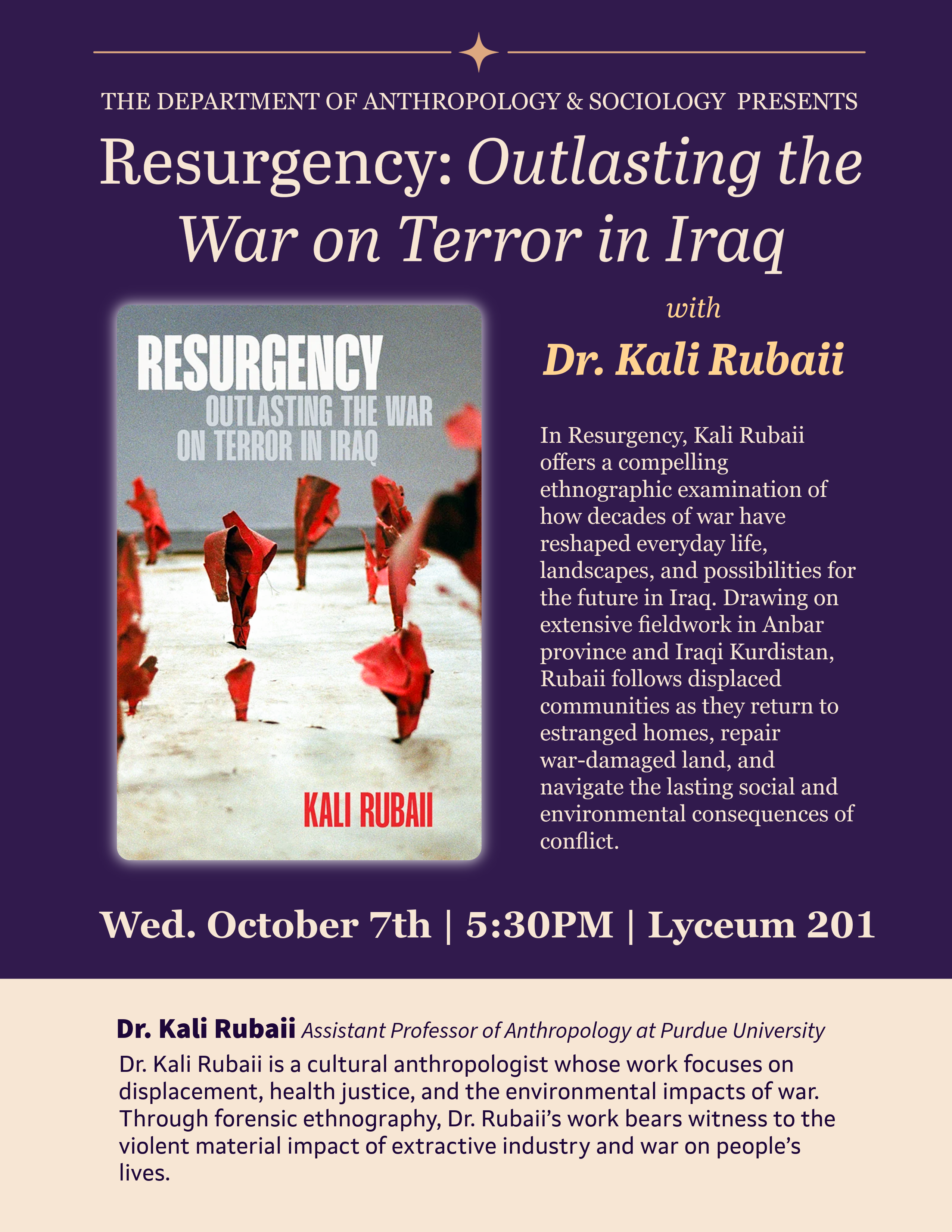
An Invitation
If you attend the lecture, you do not have to submit a response memo next week.
More Definitional Work
Defining Assimilation
In your own words, define assimilation.
10:00
0 words
Review
Review
An Orienting Question
What are modes of incorporation?
Review
A Simplified Model
Government Policy
Societal Reception
Co-ethnic Community
Click nodes to trace distinct assimilatory possibilities.
Adapted from Figure 1 in Portes and Zhou (1993)
Legacies
(Portes and Rumbaut 2001)
Not Everyone Is Chosen
The story of how a foreign minority comes to terms with its new social surroundings and is eventually absorbed into the mainstream of the host society is the cloth from which numerous sociological and economic theories have been fashioned … For the most part, this story has been told in optimistic tones and with an emphasis on the eventual integration of the newcomers … In reality, the process is neither as simple nor as inevitable.
(Portes and Rumbaut 2001:44–45, EMPHASIS ADDED)
Not Everyone Is Chosen
Why?
Key Factors
Heterogeneity Among Immigrant-Origin People
Heterogeneity in the Mainstream
Not Everyone Is Chosen
There are groups among today’s second generation that are slated for a smooth transition into the mainstream and for whom ethnicity will soon be a matter of personal choice … There are others for whom their ethnicity will be a source of strength and who will muscle their way up, socially and economically, on the basis of their own communities’ networks and resources. There are still others whose ethnicity will be neither a matter of choice nor a source of progress but a mark of subordination. These children are at risk of joining the masses of the dispossessed, compounding the spectacle of inequality and despair in America’s inner cities.
(Portes and Rumbaut 2001:45, EMPHASIS ADDED)
Not Everyone Is Chosen
A Review
Three Major Pathways
Growing Acculturation and Parallel Integration
Downward Assimilation
Pluralist or Preservationist Adaptation
Not Everyone Is Chosen
[W]hile assimilation may still represent the master concept in the study of today’s immigrants, the process is subject to too many contingencies and affected by too many variables to render the image of a relatively uniform and straightforward path credible. Instead, the present second generation is better defined as undergoing a process of segmented assimilation where outcomes vary across immigrant minorities and where rapid integration and acceptance into the American mainstream represent just one possible alternative.
(Portes and Rumbaut 2001:45, EMPHASIS ADDED)
Not Everyone Is Chosen
Why? That is, what explains this heterogeneity?
Sources of Variation
History of the Immigrant First Generation
Pace of Acculturation for Parents and Children
Barriers Encountered by the Second Generation
Family and Community Resources
Modes of Incorporation and Their Consequences
Variation Among Immigrants
Immigrant-origin populations differ
along three key dimensions.
Key Dimensions
Individual-Level Attributes (e.g., age, education)
Contexts of Reception (e.g., government policies)
Family Structure (e.g., family size, parental dynamics)
Variation Among Immigrants
Data from 1990 (cf. Portes and Rumbaut 2001)
Adapted from Table 3.1 in Portes and Rumbaut (2001)
Group Discussion III
Three Key Dimensions
In small groups, discuss how individual-level attributes, contexts of reception, and family structure jointly—and unevenly—shape assimilatory outcomes in America.
Acculturation and the
Reversal of Roles
Types of Acculturation
One of the most poignant aspects of immigrants’ adaptation to a new society is that children can become, in a very real sense, their parents’ parents. This role reversal occurs when children’s acculturation has moved so far ahead of their parents’ that key family decisions become dependent on the children’s knowledge. Because they speak the language and know the culture better, second-generation youths are often able to define the situation for themselves, prematurely freeing themselves from parental control.
(Portes and Rumbaut 2001:52–53, EMPHASIS ADDED)
Types of Acculturation
Role reversal was a familiar event among offspring of working-class European immigrants at the beginning of the twentieth century … Today, second-generation Latins and Asians are repeating the story but with an important twist … [T]he social and economic context that allowed their European predecessors to move up and out of their families exists no more. In its place, a number of novel barriers to successful adaptation have emerged, making role reversal a warning sign of possible downward assimilation.
(Portes and Rumbaut 2001:53, EMPHASIS ADDED)
Types of Acculturation
Role reversal, like modes of incorporation, is not a uniform process. Instead, systematic differences exist among immigrant families and communities. It is possible to think of these differences as a continuum ranging from situations where parental authority is preserved to those where it is thoroughly undermined by generational gaps in acculturation.
(Portes and Rumbaut 2001:53, EMPHASIS ADDED)
Types of Acculturation
Dissonant acculturation takes place when children’s learning of the English language and American ways and simultaneous loss of the immigrant culture outstrip their parents’. This is the situation leading to role reversal, especially when parents lack other means to maneuver in the host society without help from their children.
(Portes and Rumbaut 2001:53–54, EMPHASIS ADDED)
Consonant acculturation is the opposite situation, where the learning process and gradual abandonment of the home language and culture occur at roughly the same pace across generations. This situation is most common when immigrant parents possess enough human capital to accompany the cultural evolution of their children and monitor it.
(Portes and Rumbaut 2001:54, EMPHASIS ADDED)
[S]elective acculturation takes place when the learning process of both generations is embedded in a co-ethnic community of sufficient size and institutional diversity to slow down the cultural shift and promote partial retention of the parents’ home language and norms. This third option is associated with a relative lack of intergenerational conflict, the presence of many co-ethnics among children’s friends, and the achievement of full bilingualism in the second generation.
(Portes and Rumbaut 2001:54, EMPHASIS ADDED)
Types of Acculturation
Adaptation of Table 3.2 from Portes and Rumbaut (2001)
Children
Parents
American Language and Customs
Embedded in Ethnic Community
American Language and Customs
Embedded in Ethnic Community
Type
Expected Outcome
+−+−Consonant AcculturationJoint search for integration into American mainstream; rapid shift to English monolingualism among children
−+−+Consonant Resistance to AcculturationIsolation within the ethnic community; likely to return to home country
+−−+Dissonant Acculturation (I)Rupture of family ties and children’s abandonment of ethnic community; limited bilingualism or English monolingualism among children
+−−−Dissonant Acculturation (II)Loss of parental authority and of parental languages; role reversal and intergenerational conflict
++++Selective AcculturationPreservation of parental authority; little or no intergenerational conflict; fluent bilingualism among children
Disparate Outcomes
Background Factors
Acculturation Patterns
Meeting External Obstacles
Expected Assimilation Outcome
Click nodes to trace disparate assimilatory pathways.
Adaptation of Figure 3.1 in Portes and Rumbaut (2001)
Challenges and Resources
More Review
Three Contextual Sources of Vulnerability
Race or Skin Colour
Geospatial Proximity to Underclass
Shocks to the Host Economy
Three Contextual Resources
Governmental Support
Relative Insulation From Prejudice
Networks in the Coethnic Community
The Immigrant Co-Ethnic Community
Social capital, grounded on ethnic networks, provides a key resource in confronting obstacles to successful adaptation. First, it increases economic opportunities for immigrant parents, giving them a better chance to put to use whatever skills they brought from their home country and sometimes providing additional entrepreneurial training. Second, strong ethnic communities commonly enforce norms against divorce and marital disruption, thus helping preserve intact families. Third, the same networks directly reinforce parental authority. Social capital depends less on the relative economic or occupational success of immigrants than on the density of ties among them.
(Portes and Rumbaut 2001:64–65, EMPHASIS ADDED)
The Immigrant Co-Ethnic Community
Click to Expand Image
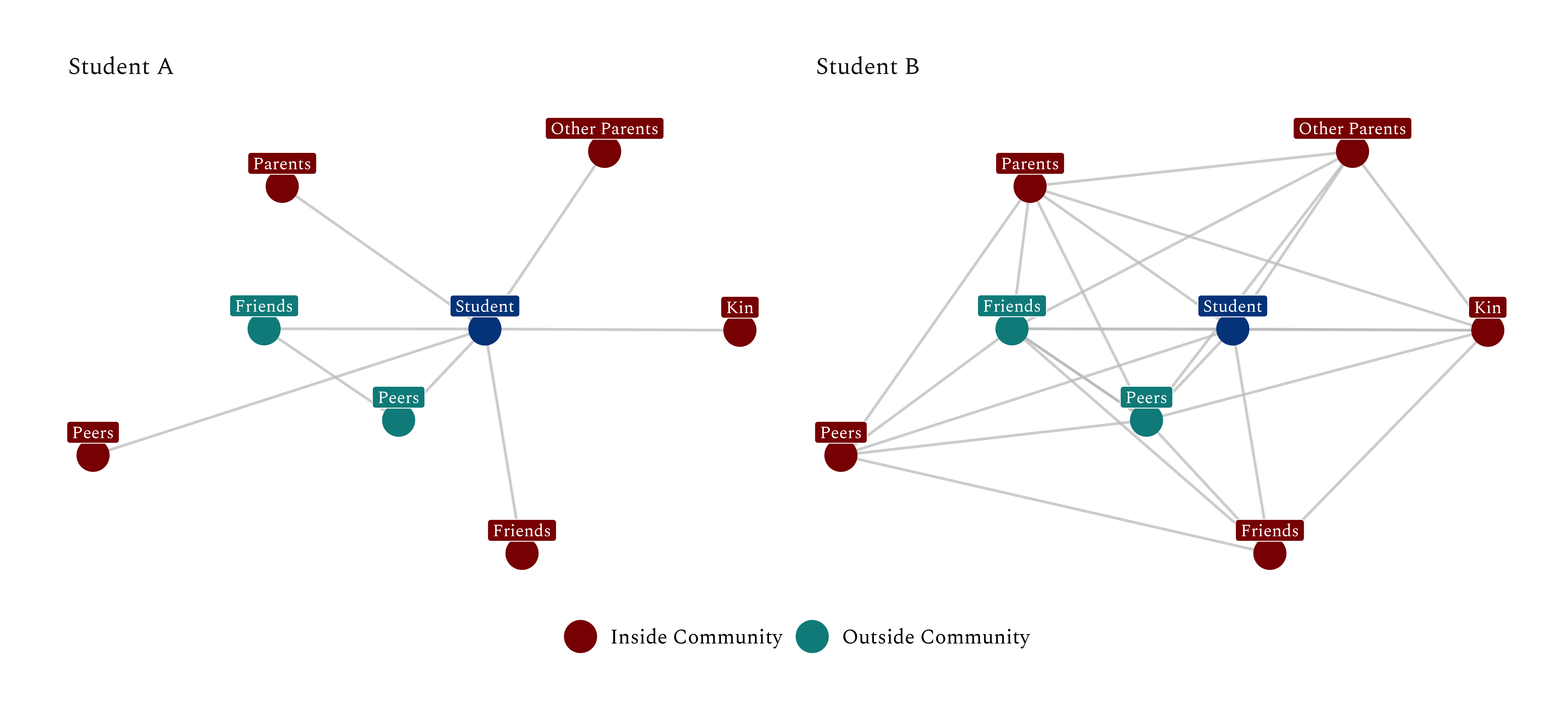
Adaption of Figure 3.2 in Portes and Rumbaut (2001).
The Broad Story
First Generation
Second Generation
Background
Factors
Factors
Intergenerational
Patterns
Patterns
External Obstacles
Racial
Discrimination
Discrimination
Bifurcated
Labor Markets
Labor Markets
Inner-City
Subcultures
Subcultures
Expected
Outcomes
Parental Capital
Mode of Incorporation
Family Structure
Faced in Isolation
Individual Resources
No Counter
Outcomes
Downward
Faced with Family
Family Resources
Family Aspirations
Mostly Upwardblocked at times
Filtered via Co-Ethnics
Family + Community
Family + Community
Upwardwith biculturalism
Support
None
Family
Family + Community
Adapted from Figure 3.1 in Portes and Rumbaut (2001)
The Broader—and Confusing—Story
Adaptation of Figure 3.3 in Portes and Rumbaut (2001)
Group Discussion IV & V
Back to the Conceptual Model
In small groups, return to the conceptual model introduced last class. Discuss the variables that might be shaping the trajectories traced in the figure. Be sure to invoke acculturation patterns, modes of incorporation, parental capital, and family structure.
A Battle of Perspectives?
In your small groups, discuss whether you see segmented assimilation theory and the neo-assimilation paradigm as competing or complementary models. Do you prefer one perspective
over the other—and if so, why?
Enjoy the Weekend
References
Lizardo, Omar. 2017. “Improving Cultural Analysis: Considering Personal Culture in Its Declarative and Nondeclarative Modes.” American Sociological Review 82(1):88–115. doi: 10.1177/0003122416675175.
Portes, Alejandro, and Rubén G. Rumbaut. 2001. Legacies: The Story of the Immigrant Second Generation. Berkeley: University of California Press.
Portes, Alejandro, and Min Zhou. 1993. “The New Second Generation: Segmented Assimilation and Its Variants.” The ANNALS of the American Academy of Political and Social Science 530(1):74–96. doi: 10.1177/0002716293530001006.